The Unseen Navigator: Understanding the Enduring Power of the Web Browser
In the vast expanse of the digital universe, one software application stands as the universal gateway: the web browser. More than just a window to the internet, it's a sophisticated user agent designed to retrieve, interpret, and display the intricate tapestry of content that forms the World Wide Web. From humble beginnings as simple hypertext viewers to the feature-rich, powerhouse applications we use today, web browsers have undergone a relentless evolution, constantly adapting to new technologies, security challenges, and user demands. This journey has been punctuated by intense competition, famously known as the "browser wars," which have shaped not only the software itself but the very fabric of how we experience the internet. By 2025, the dust has largely settled, revealing a landscape overwhelmingly dominated by one name: Google Chrome.
At its core, a web browser operates as a complex interpreter, communicating with web servers using protocols like HTTP or HTTPS to fetch essential resources such as HTML documents, images, stylesheets, and scripts. It transforms these raw data packets into the visually rich, interactive pages we navigate daily via hyperlinks. This intricate process, often taken for granted, is the foundation of our digital lives, enabling everything from online shopping and social interaction to critical research and remote work.
The Genesis of the Web Browser: From Nexus to Netscape's Rise and Fall
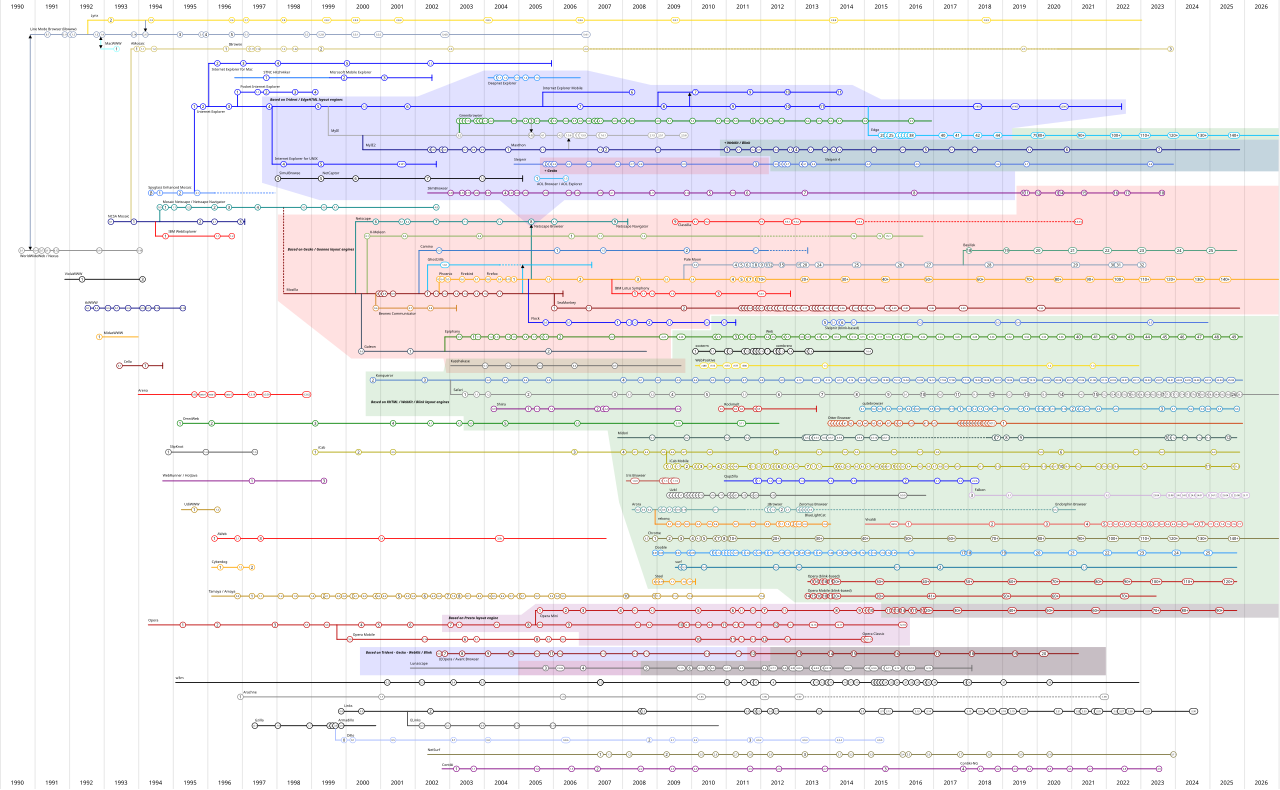
The story of the web browser is intrinsically linked to the birth of the World Wide Web itself. In 1991, Tim Berners-Lee, the visionary creator of the Web at CERN, developed the very first browser, aptly named WorldWideWeb (later renamed Nexus). This pioneering application was a minimalistic viewer and editor for hypertext documents, laying the conceptual groundwork for what was to come. However, the true popularization of web access on personal computers began in 1993 with the arrival of Mosaic from the National Center for Supercomputing Applications (NCSA).
Mosaic revolutionized the experience by introducing graphical interfaces and multimedia support, making the previously text-heavy internet accessible and appealing to a broader audience. Its success ignited the first "browser wars" in the mid-1990s. Netscape Navigator, launched in 1994, quickly rose to prominence, captivating users with its speed and innovative features. Microsoft, recognizing the immense potential and threat, responded aggressively by bundling Internet Explorer (IE), released in 1995 and based on Mosaic's code, with its dominant Windows operating system. This period was characterized by fierce competition, with both Netscape and Microsoft introducing proprietary extensions that, while pushing innovation, unfortunately led to web fragmentation. Websites optimized for one browser often displayed poorly or not at all on others. The eventual decline of Netscape Navigator and the overwhelming victory of Internet Explorer underscored the critical need for universal standards, a challenge taken up by the World Wide Web Consortium (W3C), founded in 1994, which began the painstaking work of establishing interoperable guidelines for the web.
Beyond the Interface: How Your Web Browser Renders the Internet
While often perceived as a simple application, the internal workings of a web browser are remarkably complex, orchestrated to deliver a seamless user experience. Upon receiving a URL, the browser initiates a meticulously choreographed navigation sequence. This begins with DNS resolution, translating the human-readable URL into the server's IP address. A TCP handshake then establishes a reliable connection, followed by TLS negotiation if a secure (HTTPS) session is required, ensuring data encryption and integrity.
Once resources like HTML, CSS, and JavaScript are fetched, the rendering engine springs into action. It parses the HTML into a Document Object Model (DOM) tree and the CSS into a CSS Object Model (CSSOM). These two models are then combined into a render tree, which determines the visual structure of the page. The browser then calculates the layout of each element and proceeds to "paint" the pixels to the screen, often leveraging hardware acceleration for efficiency. Modern browsers are primarily single-threaded on their main thread for these critical tasks, diligently aiming for a smooth rendering speed of around 60 frames per second. This ensures fluid animations and responsiveness while simultaneously handling user interactions, managing numerous extensions, and maintaining robust security features like sandboxing to isolate processes and protect users from malicious content. For a deeper dive into this fascinating process, explore Beyond the Click: How Your Web Browser Renders the Internet.
Different browsers employ distinct rendering engines, each with its own characteristics. Historically, these include Trident (Microsoft Internet Explorer), EdgeHTML (Microsoft Edge Legacy), Gecko (Mozilla Firefox), WebKit (Apple Safari), and Blink (Google Chrome, Microsoft Edge, Opera, Vivaldi, and many others). The engine is the true "engine room" of the browser, determining its performance, compatibility with web standards, and overall responsiveness. Understanding the role of these engines is crucial to appreciating the nuances between different browsers. To uncover more about the technological underpinnings of these engines, read The Engine Room: Inside Modern Web Browser Technology.
The Modern Landscape: Chrome's Unrivaled Dominance in 2025
Today, web browsers are indispensable tools for billions worldwide, available across desktop, mobile, and embedded devices. The competitive landscape has dramatically shifted since the initial browser wars, culminating in a clear hierarchy. As of October 2025, Google Chrome has solidified its position as the undisputed market leader, commanding an astounding approximately 73% market share globally. This unparalleled dominance is largely attributed to its powerful Blink rendering engine (a fork of WebKit's WebCore component by Google), its integration with Google's vast ecosystem of services, robust developer tools, and consistent performance.
Following Chrome, Apple Safari holds approximately 13% of the market share, primarily driven by its default status on Apple's immensely popular iOS and macOS devices, leveraging its WebKit engine. Microsoft Edge, which notably transitioned from its proprietary EdgeHTML engine (a largely rewritten fork of Trident) to Google's Chromium-based Blink engine, occupies about 5%. This strategic shift by Microsoft underscored the formidable power and compatibility advantages of the Chromium platform. Mozilla Firefox, powered by its independently developed Gecko engine, now accounts for roughly 2% of global usage, maintaining a loyal user base focused on privacy and open-source principles. Other browsers like Opera, Vivaldi, and Brave, all built on Chromium, carve out smaller niches, often emphasizing specific features like built-in VPNs or advanced ad blocking.
The overwhelming trend towards Chromium-based engines (Blink) across a multitude of browsers reflects a compelling combination of performance, compatibility, and the sheer development resources Google has poured into the project. This consolidation, while streamlining web development and ensuring consistent experiences, also raises questions about innovation and potential monoculture in web standards, making the independent development efforts of browsers like Firefox increasingly vital.
The Future of Browsing: Privacy, Performance, and User Control
The evolution of the web browser is far from over. Ongoing innovations continue to focus on critical areas that directly impact user experience and security. Privacy enhancements are at the forefront, with features like built-in ad blockers, advanced tracking prevention mechanisms, and stricter cookie policies becoming standard. Users are increasingly demanding more control over their data, pushing browser developers to prioritize privacy-preserving technologies. Firefox, for instance, has long championed these features, and Chromium-based browsers are rapidly adopting similar capabilities.
Performance remains a relentless pursuit. Developers are continuously optimizing rendering engines for faster page loads, smoother animations, and more efficient resource utilization through techniques like hardware acceleration and smarter JavaScript execution. Support for emerging web standards is crucial for ensuring an interoperable, secure, and future-proof browsing experience. The W3C, alongside various working groups, continues to define new specifications for everything from advanced CSS layouts to WebAssembly, enabling richer, more powerful web applications that blur the lines between desktop and web.
Practical Tips for Browser Users:
- Keep Your Browser Updated: Always enable automatic updates. Updates often include critical security fixes and performance improvements.
- Explore Alternatives: While Chrome dominates, don't be afraid to try Firefox, Edge, or Brave. Each offers unique features and privacy philosophies that might better suit your needs.
- Manage Extensions Carefully: While extensions enhance functionality, too many can slow down your browser and pose security risks. Only install extensions from trusted sources.
- Understand Privacy Settings: Take the time to review and customize your browser's privacy and security settings.
- Use a Password Manager: Integrated or third-party password managers offer a secure way to manage your login credentials.
In conclusion, the journey of the web browser from a niche academic tool to the universal interface for the internet is a testament to relentless innovation and intense competition. While Google Chrome stands as the dominant force in 2025, the underlying technology continues to evolve at a breathtaking pace. As users, our choice of browser shapes our daily digital interactions, influencing everything from speed and security to privacy and functionality. The ongoing "browser wars," though quieter now, continue in the pursuit of a faster, safer, and more feature-rich gateway to the World Wide Web, ensuring that the humble web browser remains at the heart of our digital lives.